Wednesday, August 16, 2006

What's Better?: Dancer in the Dark or "Dancing in the Dark"?


Lars von Trier vs. Born in the USA. Bjork vs. the Boss. Tragic arthouse film versus mainstream pop music. What more could a blog battle ask for?

What's Better?: Dancer in the Dark or "Dancing in the Dark"?

Tuesday, August 15, 2006

What's Better?: Douglas Sirk or Captain Kirk?


One is the captain of the Starship Enterprise. One is the director of Magnificent Obsession and All that Heaven Allows. One means death to red shirts; one uses red, autumnal colors.

"What's Better?": Douglas Sirk or Captain Kirk?

Sunday, August 13, 2006

What's Better?: The French Lieutenant's Woman or An American Werewolf in London?


To begin round three of this Internet diversion, I give you John Landis versus John Fowles. A literary adaptation versus a horror flick. Oddly enough, both films are listed in IMDB.com as having been released in 1981.

What's Better? The French Lieutenant's Woman or An American Werewolf in London?

Monday, August 07, 2006

What's Best? Days of Wine and Roses or Umberto Eco


Never overestimate the power of music, I guess. After last battle featured a final between two musical entries, this round features one author and one film.

What can I say that I haven't already. You know the drill:

"What's Best?": Umberto Eco or Days of Wine and Roses?

Sunday, August 06, 2006

What's Better? Umberto Eco or The Insider?


Today's semi-final features an intriguing match up. Say Michael Mann and many think "Genius, cool, hip, and surprisingly deep." Say Umberto Eco, and many people think, "confusing, dense, and impenetrable."

Then again, say Umberto Eco, and many people think, "Genius,cool, hip, cool, and surprisingly deep." Say Michael Mann and many think, "confusing, dense, and impenetrable."

So who's the real deal and who's the emperor with no clothes?

"What's Better": The Insider or Umberto Eco?

What's Better? "Living on a Thin Line" or Days of WIne and Roses?


Ah nothing like a good voting scandal to really rock the house. Malick was in the lead and even declared the winner by one exit poll, but late reports from the precincts pushed The Kinks ahead. No hanging chads here, and the Supreme Court refused to hear the case, allowing the certification to stand.

Jack Lemmon and Lee Remick had their own battles to fight...over a band of zombies. So, all due apologies to the Malick multitude. This semi-final asks:

"What's Better?": "Living on a Thin Line" or Days of Wine and Roses?

Gregory of Nyssa: The Life of Moses (Prologue)

I'm excited to be reading this book even though it is a busy time of year and I don't know how quickly I can progress.

In the prologue Gregory is making a comparison about how the measurable is precisely that because it has limits, whereas the attributes of the divine are without limit and hence cannot be said to be achieved through measurement. He says:

Just as the end of life is the beginning of death, so also stopping in the race of virtue marks the beginning of the race of evil. Thus our statement that grasping perfection with reference to virtue is impossible was not false, for it has been pointed out that what is marked off by boundaries is not virtue.

This quote is heavy and kind of deep, but the first half resonated with me especially. The whole context of this discussion provides a framework for me to undertand why it is that pursuing good and filling one's life with good can be easier or more successful than eliminating evil.

I think it was either Willard or Foster who tied our lack of understanding of the disciplines to the fear/rejection of salvation by works. We are creatures of habit, though, and sometimes the good in an activity can be extrinsic as well as intrinsic.

Many sayings or proverbs have foundations of truth in them. "Idle hands are the devil's playground." Well, no and yes. Doing nothing is better than doing evil. But it may be easier to not do evil when you are focused on doing something good (or even neutral) than when you are simply trying to avoid whatever it is you are tempted by.

Saturday, August 05, 2006

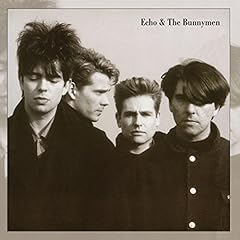
What's Better? Umberto Eco or Echo and the Bunnymen?


You know, I'm a literature person. It's high time a blog battle had a literature enrant. Umberto Eco has done philosophy, literature crticism, even literature of his own. Foucault's Pendulum, The Name of the Rose, and The Mysterious Flame of Queen Loana are titles that just reek culture.

Echo and the Bunnymen may have a funny name, but their talent is dead serious. "Enlighten Me" may be their highest chart topper in the U.S., though they did a ripping cover of "People are Strange" that ought to be familiar to anyone who saw the movie The Lost Boys.

So, "What's Better?": Umberto Eco or Echo and the Bunnymen?

Friday, August 04, 2006

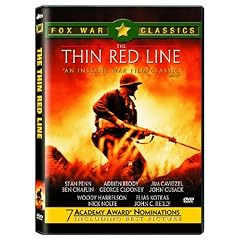
What's Better? The Thin Red Line or "Living on a Thin Line"


Okay, so I said I learned in the last blog battle not to underestimate the power of music. (The two finalists were musical despite a majority of entrants from the world of film.) Couldn't have round two without some musical choices.

The Kinks may be better known for "Lola," and I was tempted to run a "Lola" v. Lolita match, but why pass up a chance to let you all torment me by voting on one of my favorite whipping boys?

Yes, Terence Malick enters the arena as the 800 pound gorilla/heavy favorite, fresh off a recent work (A New World...hmmm...could have matched that against the Aladdin song "A Whole New World") that was so good, even I had to grudgingly admit I liked it. The Kinks...well hard to vote against the band Pete Townsend called "much more quintessentially English." (And give him props for using "quintessentially."

So, "What's Better?": "Living on a Thin Line" or The Thin Red Line?

Thursday, August 03, 2006

What's Better? Days of Wine & Roses/Night of the Living Dead?


Now here's a pair of heavy hitters. On one side there is Jack Lemmon at his peak, Lee Remick, Jack Klugman, direction by Blake Edwards, music (which one an Oscar, I think) by Henry Mancini. Social importance! Actorly moments.

On the other side, we have perhaps the best zombie film ever made. Mmmmm...zombies.

Did Todd say two things with no business being compared? Well, let's compare them..."What's Better?": Days of Wine and Roses or Night of the Living Dead?

Wednesday, August 02, 2006

What's Better? The Insider or The Outsiders


Well, time for another blog battle. We'll do eight items this time, so we should be done in one week. We'll see how many replies we get or if everyone is bored by this yet.

Today's match features Director Michael Mann and Russell Crowe in an Oscar nominated performance. In the opposite corner we have young stars, Oscar winning director Francis Ford Coppola, and a beloved young-adult book. So web surfers, "What's Beter?": The Insider or The Outsiders?

Saturday, July 22, 2006

The Devil Wears Prada

My review of The Devil Wears Prada was recently uploaded at Jeffrey Overstreet's Looking Closer site.

Ritz Waltzes to Victory

Well, thanks to everyone who voted. If I do that again, I think I'll make it shorter (8 entries instead of 16).

In honor of the winner, here are the lyrics from Song365.com. (See hyperlink below)


Puttin' On The Ritz Lyrics

MP3 Downloads

Send Irving Berlin polyphonic ringtone to your cell phone


Have you seen the well-to-do
Upon Lennox Avenue
On that famous thoroughfare
With their noses in the air

High hats and narrow collars
White spats and fifteen dollars
Spending every dime
For a wonderful time

If you're blue
And you don't know where to go to
Why don't you go where Harlem flits
Puttin' on the Ritz
Spangled Gowns upon the bevy of
High browns from down the levy
All misfits
Puttin' on the Ritz

That's where each and every lulu-belle goes
Every Thursday evening with her swell beaus
Rubbin' elbows

Come with me and we'll attend their jubilee
And see them spend
Their last two bits
Puttin' on the Ritz

------ short instrumental break ------

(Boys, look at that man puttin' on that Ritz)
(You look at him, I can't)

If you're blue
And you don't know where to go to
Why don't you go where Harlem flits
Puttin' on the Ritz
Spangled Gowns upon the bevy of
High browns from down the levy
All misfits
Puttin' on that certain Ritz

That's where each and every lulu-belle goes
Every Thursday evening with her swell beaus
Rubbin' elbows

Come with me and we'll attend their jubilee
And see them spend
Their last two bits
Puttin' on the Ritz

------ piano solo ------

Come with me and we'll attend their jubilee
And see them spend
Their last two bits
Puttin' on the Ritz

Thursday, July 20, 2006

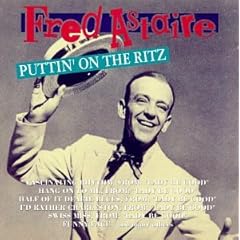
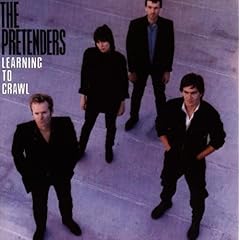
What's Best?: Learning to Crawl or Puttin' on the Ritz?


Well, if I've learned anything from this experiment it's...that I shoulda made a shorter, 8 entry tournament instead of 16 (over in a week).

But if I've learned anyhing else, it's don't underestimate the power of music, even when polling people you mostly meet on a film forum. Beating up on Buford Pusser is one thing; beating up on Natalie Portman (with hair) is something else. And I didn't think anything could stop Se7en (though the Dixie Chicks sure gave it a shot). So, for the record....

"What's the Best of the Betters?": "Puttin' on the Ritz" or Learning to Crawl?

"What's Better?" Semifinal #2; Se7en vs. Learning to Crawl


This one is hard to call. Se7en lingered in a dead-lock with the Dixie-Chicks, actually trailing in OT before a late equalizer sent it through on goal differential.

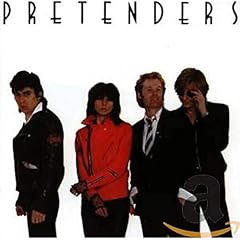
The Pretenders have been methodically dispatching of the competition, but are people really going to want to musical works in the final? That's anyone's guess.

"What's Better?": Learning to Crawl or Se7en?

P.S. And yeah, I know this isn't the album cover for Learning to Crawl, but I was getting tired of the same visual.

Wednesday, July 19, 2006

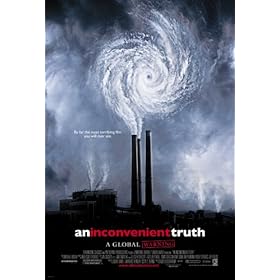
What's Better Semifinal: Puttin' on the Ritz v Inconvenient Truth


On paper, this looks like a mismatch. "Puttin' on the Ritz" rolls into the semifinals with the most cumulative votes of any entry, An Inconvenient Truth seems to be following the Jim Valvano mantra of "survive and advance." Still, we all know what happened when Valvano's Wolfpack took on the mighty Phi-Slamma-Jamma, don't we? I think it may take that kind of upset.

Nevertheless, for a spot in the finals, I ask:
"What's Beter?": An Inconvenient Truth or "Puttin' on the Ritz"?

Tuesday, July 18, 2006

What's Better? Quarterfinal #4: Penguins v Pretenders


Ah, thought I had forgotten about those pesky Penguins, did you? No, I just needed to give the Pretenders a break in between their first set and their first (and last?) encore. The Penguins may have marched past the Flight of the Phoenix, but the Pretenders crawled all over Walking Tall So who's the favorite to take the last semi-final slot? Let's find out...

What's Better?: Learning to Crawl or The March of the Penguins?

Monday, July 17, 2006

"What's Better?" Quarterfinal 3: Dixie Chicks vs. Se7en


Well here are a pair of heavy hitters. It seems like even those who begrudge the Chicks their political views grittingly admit they make some good music. And even those who find Fincher's flick full of nihilistic despair still think it professionally and artfully made.

So, "What's Better": The Dixie Chicks or Se7en?

Sunday, July 16, 2006

What's Better? Quarterfinal #2: Portman v. Truth


Quarter-Final #2 pits Natalie Portman in Revenge of the Sith v. An Inconvenient Truth.
Now, granted, one is an actress who appeared in what has to be one of the twenty or so highest grossing movies of all time, but the other features a man who did receive more votes for president than the man currently residing in the oval office. So to even things up, I pulled up another publicity photo, one without those honeybun hair braids.

Okay, let's make this official. Web surfer's, "What's Better?":
Natalie Portman in Revenge of the Sith or An Inconvenient Truth?

Let Us Now Praise Dying T-Shirts...

Found a rip in my Kudzu Film Festival 2000 T-Shirt while folding laundry today.

How very sad.

The T-Shirt always strikes me as a poor way of trying to commemorate a memory you don't want to forget. It rarely lasts longer than the memory itself.

Saturday, July 15, 2006

"What's Better?" Quarterfinal 1: Redick v Ritz


Today's quarterfinal match pits one winner that went through unopposed and one of the higher vote getters in the first round. Incidentally I drew all the winners out of a hat to have a totally random draw for the the second round.

So today's question is, "What's Better?": J. J. Redick or "Puttin' on the Ritz"?

Thursday, July 13, 2006

What's Better: Round 1: Match 8 (Learning to Crawl v Walking Tall)


Well, for me this is a no-brainer, but I'm only batting about .500 in this tournament, so who knows the eclectic tastes of the surfer's by.

On one hand we've got (is it fair to call this) the breakout album of Chrissie Hynde & Co, featuring such memorable ditties as "Watching the Clothes Go Round" and "Middle of the Road."

On the other hand we have the original Buford Pusser biopic anchored by the peformance of Joe Don Baker in the role many think he was born to play.

So, to close out the first round, I ask, "What's Better?"
Learning to Crawl or Walking Tall?

Wednesday, July 12, 2006

What's Better: Round 1: Match 7 (24 v 7)


Here's a battle of two works that generally are well respected amongst people whom I otherwise consider sane.

I got about 1/2 way through 24 Season 1 and found it outlandishly silly. I watched Se7en and found it morbidly gross. Yet each work has passionate fans that insist that it elevates the genre it inhabits.

So I ask, "What's Better?"

24 or Se7en?

Tuesday, July 11, 2006

What's Better: Round 1: Match 6


We've had the Dixie Chicks, we've had J.J. Redick, so what else engenders strong emotions? Al Gore and the Vietnam War for two.

An Inconvenient Truth is described on IMDB as follows: A documentary on Al Gore's campaign to make the issue of global warming a recognized problem worldwide.

A Bright Shining Lie is described on the same site this way: True story of Army man John Paul Vann, whose military success provided him the fulfillment he never found in his personal life.

Like in the battle between Takin' it to the Streets and Puttin' on the Ritz, though, this one isn't just about the individual works of art. It's about whether or not what is represented by each title, conceptually, is preferable to that which is symoblized in the other.

So, I ask, "What's Better?"
An Inconvenient Truth or A Bright Shining Lie?

Monday, July 10, 2006

What's Better: Round 1: Match 5 (Redick v Riddick)


As we pass the 1/2 way point of the first round, there are still some interesting challenges to go.

Today's battle is anyone's guess. In one corner we have a former Duke star (now with the Orlando Magic). In the other corner, we have a science-fiction extravaganza with Vin Diesel and Judi Dench (no, that's not a typo).

Sooooooooo...What's Better?:

J.J. Redick or The Chronicles of Riddick?

Sunday, July 09, 2006

What's Better: Round 1: Match 4


Today's matchup features two contenders you don't want to mess with, each with a lot more grit and determination than you might think at first glance. So, "What's Better?": Dixie Kong or the Dixie Chicks?

Saturday, July 08, 2006

What's Better: Round 1: Match 3


Well I think I know who'll win this one, but after yesterday's shocker, who can tell? So without futher ado, what's better:

"Puttin' on the Ritz" or "Taking it to the Streets"? (Remember, it's not just the song...it's the idea, the concept, the meaning of it all.)

P.S. Looks like we have a tie going for yesterday's vote, so we'll leave it with a golden goal situation--next vote (for either Natalie Portman) is the winner.

The Long Loneliness (210-235)

This section is given the title "Community."

I feel a resistance in myself when Day speaks of the poor. Resistance to what? I'm not sure. Often, if I parse her sentence, I find I agree with the meaning, for example when she writes:

"As Peter saw it, to live according to Gospel simplicity meant that you begged when you were in need and by this you gave the opportunity to the rich to become poor for Christ's sake. 'Appeals, not demands,' was another of his slogans."

The slogan resonates, and I have a hard time atriculating anything conceptually wrong with the passage (other than, perhaps, I'm suspicious of any understanding of "Gospel" anything that can be reduced to a slogan or focuses exclusively on our material goods). I do know that while reading it (and this section) I find myself mildly bored and vaguely irritated. Is this my conscience being pricked (and me not liking it)? Is it my sniffing a problem (but not putting my finger on it)?

Day speaks of advocating detachment from unecessary luxuries (cigarettes, beer, cosmetics, television, movies, radio) and using the savings to buy a farm. In this, she doesn't sound that much different from an investment columnist for Motley Fool who speaks of tracking your entertainment budget to increase savings. But she recognizes that there will always be illnesses, emergencies, things that may impoverish those who have not necessarily been profligate.

Maybe I just grate my teeth at the ease with which an "unecessary luxury" is defined. (Are there "necessary luxuries," I wonder?) I had a student once who was working on a speech that argued that Christians should not go to the movies, and one of her arguments was to point to all that could be done with the money Christians spent on movies if it were given to missions. Nice thought. Of course, she was on the basketball team, and I asked her how much money she had spent in her life on athletic shoes, equipment, tickets to games, seminars, etc. There really is a tyranny of the utilitarian argument.

Day's not naive, though. She recognizes many of the problems and possible contradictions in the actions she chronicles (her's and others'). One should embrace voluntary poverty...but a man is someone who should provide for his family. One should give profligately...but one should also save frugally.

Over all my reading, I suppose, is an enculturated attitude towards "the poor." I remember coming out of a theater many years ago after having seen Hoop Dreams and being behind two late middle-aged women and hearing one tsk-tsk that they couldn't pay their electric bill but "they all had televisions and $300 sneakers." I hoped I would never become so...(what was the word I thought, or did I even finish the thought?)...out of touch?...snobbish?...racist?....selfish? Since then I've learned that as one moves slowly up the food chain, calls for voluntary poverty can be received in a different spirit than when one has, relatively speak, generally less than one's neighbor.

Day does not romanticize the life of service or voluntary marginalization, and I appreciate that fact. She speaks of it as being hard and, at times, disappointing. Like others, though, she speaks of its rewarding aspects. Yet she often speaks of the hardships with more skill, detail, and pathos than she does of the rewards. I wonder if this is a function of a life of trying to get the blinded to see and feel the suffering around them and of less contemplation on the joys (whatever they may be).

Take, for instance, the passage where Day relates of a a farming commune in Northern Minnesota: "It was a grim experience, though all seem now to look back on their days there with nosalgia" (232). Here she speaks of her friend's philosophy of work: "But because of the Fall the curse is laid on us of having to earn our bread by the sweat of our brows, in labor. St. Paul said that since the Fall nature itself travaileth and groaneth. So man has to contend with fallen nature in the beasts and in the earth as well as in himself. But when he overcomes the obstacles, he attains again to the joy of creativity. Word is not then all pain and drudgery" (227).

In both of the passages cited above, the drudgery, the pain, the grimness of the experience seem so much more palpable and real than the abstract nostalgia and the joy of creativity. I'll be the first to admit that I have a gloomy disposition, so perhaps these phrases are just on a frequency I am more attuned to hearing. I was thinking, though, that I was reading Helen Prejean's Dead Man Walking in another context, and she does an excellent job of conveying the satisfactions or joys that can come with hard, painful, sacrificial giving as well as chronocling just how bad those less fortunate than her readers have it.

Or so it seems to me. There is, of course, always the possibility that I resist out of my own continued selfishness to distance myself from the poor and the call to love them.

What's Better: Round 1: Match 2


Is bald beautiful? Or are honeybuns sweeter than honey?

What's better? Natalie Portman in V for Vendetta or Natalie Portman in Revenge of the Sith?

Friday, July 07, 2006

What's Better: Round 1: Match 1


Okay, over at Arts&Faith.com, I was lamenting the apparent disappearence of one of my favorite time wasting web sites, whatsbetter.com.

The premise of the site was that you got two people, items, concepts, places, and you clicked on which one was better. Judging by the response to the A&F thread, it looks like I wasn't the only one who missed it.

So, to further promote numbingly mindless comparisons, I thought I'd try having a "What's Better?" tournament. I'll post 1 pair per day and see if I get any comments. Whichever pair gets the most votes (in the comment option) moves on. If there are enough responses, I might even make it double elimination. If there are no responses, I may just quit.

So here's your first "What's Better?" match up:

What's Better?
The March of the Penguins or The Flight of the Phoenix?

Monday, July 03, 2006

The Long Loneliness (182-210)

Okay. I like The Long Loneliness, really...

can you sense the "but" coming?

I've forgotten if the original list given by Renovare was called "Spiritual Classics" or "Devotional Classics" and I'm occasionally puzzled by the incorporation of some of the more autobiographical works into a category of devotional literature.

Hmmm...will have to look that up.

I have no notes on the chapter entitle "Paper, People, and Work." None.

Onto the section entitle "Labor."

Day says of Christ, "He spoke of the living wage, not equal pay for equal work in the parable of those who came at the first and the eleventh hour" (205). Interesting point. Intuitively I wanted to insert the phrase "minimum wage" for "equal pay for equal work." I wonder if this was a loose phrase or if there is a sense of this passage that I'm missing.

Ah, here's the passage, I had marked as the most troublesome for me:

"He died between two thieves because He would not be made an earthly King [....]His teaching transcended all the wisdom of the scribes and pharisees, and taught us the most effective means of living in this world while preparing for the next" (205).

One of the things I appreciate about Foster's Streams of Living Water, upon which parts of the Spiritual Formation Workbook seems to be grounded is the idea that in the different emphases of different traditions there is wisdom that can be gained. I have a deep respect for those brothers and sisters who have practiced in or advanced the Social Justice tradition, but I confess my knee-jerk, rigorously drilled I-V doctrinal, evangelical response to the first sentence was "Oh, is that why he died? I thought it was to wash away the sins of the world." I understand the two are not mutually exclusive, but I do remain concerned that in the writings that I would associate with the Social Justic tradition, Jesus can sometimes come across as a great teacher-thinker-exemplar (all of which he is) but a bit fuzzy on the whole Messiah-savior thing.

And yet...

So many who are advanced or practiced in the Social Justice tradition do (or appear to do) such a better job at following Jesus's teachings than I do that one feels a bit Pharisaical to question them on doctrine.

That being said, I'd feel on a bit firmer ground if there was a bit more about God/Jesus here and a bit less about the Catholic Daily Worker. But that's just back to the main point, which is that the subtitle is "Autobiography" of Dorothy Day, not the "Devotions of Dorothy Day."

Post Script--A search back to Renovare's page indicates that they do indeed label the list "Spiritual Classics" not "Devotional Classics"

Saturday, July 01, 2006

World Cup 86


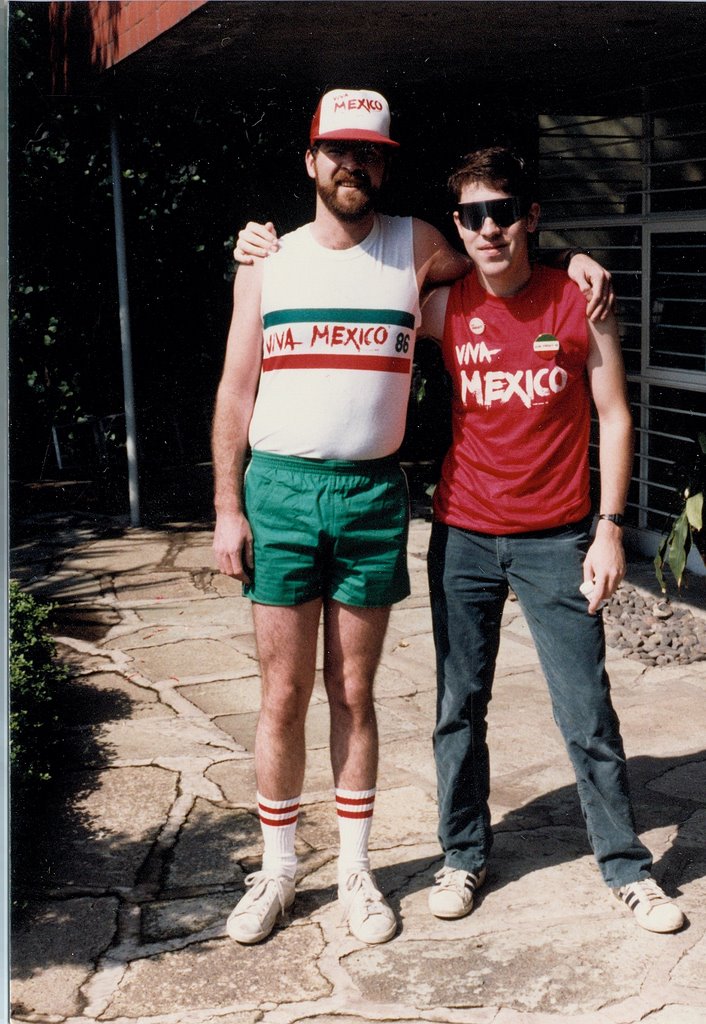
My brother and me on the way to the Mexico-Bulgaria knockout game in 1986. No way we were getting mistaken for Bulgarians at the Estadio Azteca. (I'm the one in red.)

Friday, June 30, 2006

Scott Kingsolver reviews Superman Returns

I'm pleased to provide some review space over at Viewpoint for Scott Kingsolver's review of Superman Returns. Scott is a Broadcast and Electronic Media major at the University of Oklahoma, and he is minoring in Religious Studies.

MoviesMatter.com to Host Some Content

The fine folks at MoviesMatter.com have offered to house and archive some of my reviews that didn't run at Christian Spotlight.

The review for Ushpizin was the first that was moved over there. The layout of the site looks great, and there is lots of good content over there. Check it out.

Tuesday, June 27, 2006

North Carolina State Games

Nice disc golf weekend. Shot a pair of 49s at Kentwood during the North Carolina State Games. I don't think I've ever shot a PDGA round under par before. Yeah, it was Kentwood, but still...I was happy.

Then on Monday I won random-draw doubles for the first time ever. Shot a -12 with my partner at OT Sloan in Sanford.

Okay, Wes (my partner) shot like a -10 and I got one or two holes with good drives to help the score. But, hey, our pay out was the same...and while he probably woulda still birdied (no, that's not a misprint) hole 11 (I was no help), I did have a few drives we ended up using, so who knows what our scores would be with other partners. That's doubles.

Saturday, June 17, 2006

Forgiving Dr. Mengele

Uploaded a review of Forgiving Dr. Mengele at Viewpoint.

This documentary chronicles the story of Eva Moses Kor, an Auschwitz survivor who sparked controversy when she decided to announce that she had forgiven the Nazis.

Thursday, June 15, 2006

The Long Loneliness (167-181)

The title of this section is "Peasant of the Pavements."

I thought once or twice while reading this section about long gaps in some scriptural passages, particularly the histories. Moses flees after slaying the Egyptian and then...fast forward to an older and wiser man confronted with the burning bush.

How often people have wondered about those gaps, longed, perhaps, for some arcane bit of lost knowledge that might help explain the transition.

Yet more information rarely does the trick.

This section of Day's work often felt slow to me, and I had trouble sharing her enthusiasm for the particular details that stayed in her memory. Perhaps this is partially why I have difficulty with devotional literature. There is still a straining, from youth, after the significant, that makes one want to gloss over the daily, the mundane, and in doing so to chafe against those who do not. Even in the scripture, there are passages that are intensely descriptive of a moment--the Psalms come to mind--that I've always had trouble reading. Perhaps as I get older, I will come to appreciate those forms of expression that linger over the moment more.

Day and her friend talk of a calling to make a society in which it is easier for men to be good. I chafed, too, against this message. Is it ever easier to be good? I think there is a misunderstanding of human nature there--but an argument could be made, I guess. Certainly the New Testament teaching on the rich and poor--saying it is easier for a camel to go through the eye of a needle than a rich man to inherit the kingdom--might be read to mean there are all sorts of varied difficulties than different segments of society have. Emotionally I certainly FEEL like it is harder to be good when I have less power or control or money, but experentially, I haven't known that to be the case.

So maybe I'm struggling to understand Day's conception of the social justice strain of the gospel and to reconcile it with my own experience and beliefs. I recently finished Helen Prejean's Dead Man Walking, and there was a strain of social justice there--voluntary poverty (material and spiritual)--that while no easier to practice, made sense to me and was (key point) recognizable. Perhaps I'm a Gen-X cynic who thinks the prospect of changing society on an institutional level is just impossible and hence those who advocate it are naive...but, then, changing one human heart is impossible too, so perhaps the same God who can inspire one soul to pray for another against nearly impossible odds can equally insipre one soul to work against a sea of impossible odds to effect large changes in institutions, not in the belief that they will be permanent, but in the hopes that they will be good.

Sunday, June 11, 2006

Disc Golf in All 50 States--The Quest Continues

One of my life goals is to play Disc Golf in all 50 states.

This year, my quest moved forward, and I reached the 30 state plateau. I also have now played 75 different courses.

That's the good news.

The less good news is that my play, like my application of other skills, has it's ups and downs. I thought I was playing better. Indeed, I played several difficult courses under par this year. Then I returned home and promptly threw a 61 at Buckhorn, a full 5 to 6 strokes over my average. Golf is a game of rhythm and comfort and practice.

Here are some scores from this year.

Brahan Springs Park; Hunstville, Alabama

3-3-4 2-3-3 4-2-2 OUT (26)
3-3-3 3-2-2 3-2-3 IN (24) 50

LaFleur's Bluff State Park: Jackson, Mississippi
(Doubles w/ Cindy)

4-3-2 3-4-2 3-3-3 OUT (27)
3-4-3 3-3-3 2-3-2 IN (26) 53

Lazarre DGC; West Monroe, Lousiana
(Doubles w/Cindy; High Water Course; Short Tees)

2-3-2 3-3-3 3-2-2 OUT (23)
3-3-3 3-3-3 2-3-3 IN (26) 49

Muse Park: Jackson, TN

2-2-3 3-3-2 2-4-4 OUT (25)
3-3-3 3-3-3 3-3-2 IN (26) 51

It hasn't been all birdies and light, though. Seven oaks in Nashville chewed me up and spit me out.

Friday, May 26, 2006

Citizen X (1995)

Uploaded a new review of Citizen X at Viewpoint.

Thursday, May 25, 2006

The Long Loneliness (139-166)

This section encorporates the end of "Love Overflows" and "Jobs and Journeys." The latter is the last section of Part II: Natural Happiness.

There is a distant, sketchy quality to some of these passages that I found familiar. In those rare times that I have looked back on my own journals I have noticed long silences during significant changes in my life, silences that seem to testify to the fact that life was occuring.

I also found it interesting that Day reports an increase in her feelings of isolation upon joining the church rather than a decrease. There's a lot of truth to that, I thought. Before joining the church, her relationships were found on common interests, goals, desires. Fellowship was easier. The association in an institution often feels like a familial one--the bonds being external, feeling arbitrary.

Do not those in the church have common interests, goals, desires? Should they not? Why does it always feel as though the closeness to other Christians is a mandated chore rather than an affinity? Certainly in Day's case, it is easy to see that the institution stood (if only symbolically) against ideas and people whom she held dear. One hopes that the reality of the people one meets in the church dissolves one's false image of the church and makes it easier to challenge one's own stereotypes. Day says, though, that she often attended mass, gave confession, etc. but "after three years" she still "did not know personally one Catholic layman" (166).

I suppose of especial interest is the fact that Day uses the phrase that makes her title in this section. She claims that women are "especially" social beings, "who are not content with just husband and family, but must have a community, a group, an exchange with others" (157-8). "Young and old, even in the busiest years of our lives, we women especially are victims of the long loneliness" (158).

I'm not sure I buy this, any more than I buy generalizations about gender made by John Grey in Men are From Mars, Women are From Venus...Do I think men and women are essentially different in some ways? Yes, I suppose so. But whenever someone tries to articulate those differences, the descriptions strike me as too pat, too generalized. I know some women who claim to be and appear to be deeply introverted, who don't seem to be "especially" social nor particularly dependant upon an exchange with others. I know some men who need a community, who can do just about anything except be in alone with themselves for five minutes.

But that is too nitpicky, I think. Why must I pick the sentence out of a 100 that makes me say, "I disagree" rather than listen to those parts which resonate and connect and learn what I can from them?

Sunday, May 14, 2006

The Long Loneliness (109-138)

Yes, I am still reading the Long Loneliness. What with buying a house, getting in final grades, graduation, etc., I'm behind. What else is new?

I'm also slogging through this section because a lot of it is about the joy of giving birth, how every woman's deepest desire is to be a mother, etc.

But I don't mean to be glib.

Clearly having a child was an important paradigm shift in Day's life, and reading about it did make me think about how living for someone other than yourself can be clarifying for those facing existential, theological, or religious quandries.

Day writes:

"I had been passing through some years of fret and strife, beauty and ugliness--even some weeks of sadness and despair. There had been periods of intense joy but seldom had there been the quiet beauty and happiness I had now" (135).

Nothing profound, but one of the interesting aspects of Day's writing is the way in which she differentiates similar emotional states. It leads to my thinking about what the difference might be between happiness and joy, sadness and despair, etc.

Thursday, May 11, 2006

April Viewing Log

*= a second (or later) viewing
4/7--Elizabethtown (DVD)
4/7--Domino (DVD)
4/12--La Promesse (DVD)
4/18--We Don't Live Here Any More (DVD)
4/18--Million Dollar Baby* (DVD)
4/27--Aeon Flux (DVD)
4/27--Capote* (DVD)
Hmmm. April was not exactly the cruellest month, but in terms of movie watching, well I was grading a lot of papers and moving, so not much of interest on the slate. La Promesse (Dardennes) was probably the best. I thought Aeon Flux and Domino were stupid, but give a special prize to Elizabethtown for being irritatingly bad.

Saturday, April 29, 2006

Stephens County Pro Am 2006

Driving in to Toccoa is a bit like going to the dentist.

You may like the dentist you have now, and your memories of past incidents may not be uniformly horrific, but there usually isn't much on the plus side of the memorial ledger to engender nostalgia feelings.

Driving in to Rose Lane, then, is a bit like meeting up with a friend who stood by you during a court martial or a unit you fought a war with. On the one hand, you have strong feelings of loyalty. On the other, those feelings are inextricably embedded in negative memories.

The course is windy. Very, very, very, windy. The kind of windy that when I was living in Toccoa I would have turned around and driven home. But I've driven six hours, so I guess I'm staying.

Despite the wind, I birdie three of the first six holes (and make a long putt to save par on another). And then...

...then the same old tournament same old. I hit trees a few feet in front of my tee pad. The wind carries me places I never shoot from. Despite putting well all day, I manage to turn a 3 down into a 4 over, and when I come back for the afternoon session, I have to play the long tees. I'm tired. I've driven six hours. My ankles hurt on a course that's a tough walk, and the holes get longer.

My agressive putting results in my first three putt on the opening hole of round two, but despite that and an out of bounds, I jump on the three train for some long holes and manage to put together a stretch of play. Then the wind blows up again and I go out of bound on hole 5 and take a circle 6. Pffft.

You know, I should be happy. Lot of good things are happening in my life. I just bought a house, my work year is drawing to a close. But I've been in a terrible mood all day. Maybe I just shouldn't play tournaments, I don't konw.

Last Monday, I was playing blind-draw doubles at OT Sloan with a payout of the top 3 teams. My partner and I shot a -10. Three of the last five groups to come in tied at -11. It's been that kind of Disc Golf year.

And the thing is, I putted well. I could have been an additional ten strokes easy. I try to tell myself that it was the wind, the layoff, the new hole configurations, but the truth is I'm Michael Chang slugging it out with Andre Agassi and Pete Sampras. Moving up to Masters level just means maybe that it's Jim Courier or Boris Becker. Maybe they don't hit as hard as Sampras, but they still hit harder than me. And I can make all the twenty-five foot putts I want, that still itsn't going to gain me strokes if they are to save par on 325 foot holes.

I try to tell myself that I've just got residual bad mood from a conglomeration of negativity that has been surrounding me recently. People saying they aren't in a bad mood who obviously are. Cruddy drivers on the road. Passive-agressive sulkers in many spheres of life.

Anyway, it's nice to see the course, even if the holes I remember nostalgiacally are being systematically moved, lengthened and replaced.

Round 1 (5664 feet) (Starting on hole 12)

3-3-3 2-2-2 4-5-3 3-3 (33)
3-3-4 2-4-4 4-4-3 3 (34) 67

Round 2 (6580 tired feet) (Starting on hole 11)
4-5-3 4*-3-3 3-3-4 3-3* (38)
3-3-3 3-6*-3 3-4-3 4 (35) 73

Sunday, April 23, 2006

Dumbest Thing I've Heard at the Euchre Tables This Year

So I was playing a game at Hardwood (I know, Yahoo! has been slow recently).

My partner ditched the game, and after a brief wait, I went ahead with the robot partner...

To which one of the players objected that the game was unfair...

...because the robot partners never make mistakes.

Saturday, April 15, 2006

More on going alone with 8

Well it is probably inevitable that having written on this topic it would come up in a game. Actually similar hands came up twice yesterday. The first is an example of an even more common example than the one previously mentioned.

My team was winning 8-5 on my deal. Queen of Spades was dealt and after calling and discarding, I held:

Jack of Spades
Jack of Clubs
Queen of Spades
Ace of Hearts
King of Hearts

My opponents led a low heart which was trumped by my partner. My partner led back a low club, effectively finessing my two bowers. If I trumped with the queen, I ran the risk of my opponent overtrumping with a king or ace. I took trick with one of my bowers and led out the other bower, but my opponent on my left now had ace protected. She played off a low trump and eventually had stopper.

If I had gone alone, I would have take first trick wih the ace of hearts and run trump, taking four points.

Of course--and this is an important point--there are configurations for both of these hands that would allow them to march (take all 5 tricks as partners for two points) but not march alone. So one can say, "hey, hindsight is 20-20."

Euchre is a game of probability. My point with these two examples is not that going alone with eight points is the better play or always the right play, only that it is an acceptable play. There will be times when you choose a 65% play and it doesn't work, while in hindsight the riskier 50% play might have. That doesn't make it the wrong play. Also, don't forget to factor in who you are playing with and how well you know their tendencies.

Going alone with 8 points isn't always right, but there are legitimate reasons to do so with certain hands that have nothing to do with bad table manners.

Saturday, April 08, 2006

Euchre Ponderings--Going Alone With 8

I've been reacquainting myself with life on Case's Ladder, playing Euchre in the Yahoo! advanced room. There is a lot less activity than there used to be.

I joined Case's in 1998, and it was a zoo. The amount of cheating was astronomical, but the competition was fantastic. I eventually made it to #1 in the Fall of that year, the week before starting a full-time job.

These days there appears to be about 20-50 active players, though there are a few more who pop in from time to time. Most of the people are friendly, but the playis uneven. As a result, I thought I'd write down some ponderings.

Back in the early days, there somehow developed this idea going around that calling alone with 8 points was considered rude or bad etiqueete, the equivalent of rubbing someone's face in a bad loss.

Let's see if I can put that myth to rest.

First up, if a hand is a lay-down, then who cares? But if it is a losable hand, then I don't care if my opponent goes alone. Makes it easier to stop him/her on those 1 in 1,000 times where it is a misclick or mistake.

But more importantantly, there are hands in which a loner can make it but the partnership might not march. In these cases, why should a person be penalized for utilizing strategy? Let's look at the following hand, for intance:

North
9, 10 Clubs
VOID Diamonds
A Hearts
K, 10 Spades

West..................................... East
J, A, K Clubs........................ VOID Clubs
A Diamonds......................... K, Q, 10 Diamonds
VOID Hearts......................... 9 Hearts
J Spades............................... 9 Spades


South
Q Clubs
Diamonds
KQ Hearts
AQ Spades


Now imagine North is dealing and the 9 of Diamonds is turned up. It is quite possible that it would be turned down (if N/S called it, they would be set). Now everyone passes to West, who calls Clubs.

GGA? Not so fast.
If East leads Diamonds, North trumps and the hand makes one point. South has no diamonds; this hand would get four points if called alone, but 1 if called as pairs.

Yes, West could be reasonably sure his partner would lead trump, if she has it. Absent that, it is conceivable that one might lead the suit one has three in, assuming it is best chance to hit partner's void.

So the next time someone goes alone at 8 and the other team complains, call it what it is...sour grapes.

March 2006 Viewing Log

*= a second (or later) viewing
3/3--Aristocrats (DVD)
3/3--Winter Light (DVD)
3/4--Casablanca (DVD)(Critic Commentary)*
3/6--Shampoo (DVD)
3/8--40 Year Old Virgin (DVD)
3/14--Equilibrium (DVD)
3/14--The Heiress (VHS)*
3/18--The Gleaners & I (DVD)*
3/18--Junebug (DVD)
3/21--Washington Square (DVD)*
3/28--Emma (VHS; Beckinsale/A&E)*

Not a thrilling month. Best viewing experience? Casablanca, I guess. Least favorite would have to be the Aristrocrats. I like some crude humor (like South Park), but I just found it dully repetitive.

Monday, March 13, 2006

Dogwood Crosstown Classic, Day 2

That giant thudding sound was me falling on my face in day two. Well, more like running out of gas. I was 10 over par my last 5 holes of the P.M. session. 72 Holes of Golf in 2 days finally caught up with me.

Ugggh.

Lessons learned:
Only play in single day tournaments.
If you've played a course before but haven't thrown the alternate tees, you haven't actually played the course before.

Saturday, March 11, 2006

Dogwood Crosstown Classic, Day 1

Phew, two rounds at Zebulon. That makes a long day.

I had a goal of 63, and I made that on both rounds. Shot a 62 the first round and a 60 the second.

The only slight twinge was that I was shooting real well the second round that I could have been in the 50s if I had not taken a 5 on the last hole, 17, one of the easier ones on the course!

Oh, well, still played under control. Agressive. Made a few birdies. Didn't blow up. Took 4s on the long hole (3) twice, and on 9 the second round. Oh, I think I'm in like 7th place out of 10. So, hey, being a "Master" (over 40) means I'm moving up in the world--NOT!

Two more rounds at Cedar Hills tomorrow. I'm going to be dead tired.

Zebulon Community Park; Zebulon, NC
(http://www.radl.biz/Courses/ZEBULON/main.htm)
A.M.

3-3-4 2-3-3 4-3-5 (30) Out
3-4-3 3-4-4 4-3-4 (32) In 62

P.M.

3-2-4 3-3-3 4-4-4 (30) Out
2-3-3 3-3-3 4-5-4 (30) In

Thursday, March 09, 2006

The Long Loneliness (89-109)

This section, "A Time of Searching," concludes Part I, also called "Searching."

There is something endearing about the way in which Day glosses over worldly events, indicating that they are of little or no importance. She will write for a page or two about a friend, thoughts about the mass, whatever, then let go in a sentence about how she got $5,000 for her first book or had been in love with a man for several years.

It is no doubt the cynical times that we know live in (or, perhaps, my own cynical nature) that makes it hard not to read these passages as an affected modesty. But I don't. There is a spiritual lesson here about what is of greater importance.

Then again, part of the nature of spiritual disciplines may be to learn not to despise the affected. Perhaps we know a feeling or emotion should be true, learning to act on that knowledge can sometimes bring about the state of feeling it to a greater degree than can simply waiting to feel, naturally, that which is unnatural.

In this section, Day speaks of some Roman Catholic friends and says, "I wondered why they never made any attempts to interest me in their faith" (106). The past tense is important here, suggesting that she wondered at the time, not merely in retrospect. I'm not sure what this meant. She states she went with them to mission but felt "outside." I thought while reading this of so many speeches through high school, undergraduate...so many sermons...about evangelism, about friendship. It is a hopelessly muddled topic in our age, and it seems the advice or instruction we get is always at a polar end of the spectrum: only the Holy Spirit can win people, our job is to stay out of the way; or, we are responsible for taking every opportunity to mention the gospel--speaking of "the" have you heard of "the" four spiritual laws?

I guess I don't find it strange that her friends did not try to interest her in their faith or that she did not perceive them as doing such. How many times have we tried to interest others only to be rebuffed, silenced, criticized, and told that religion is private? But that's a different time and so perhaps not fair to apply to her story. Yet I find it hard to believe that times are all that different of the polite (and less polite) ways of saying "keep your faith to yourself; I couldn't care less about it or you in areas where you are not who I want you to be or where you make me feel uncomfortable" have changed all that much.

I guess, then, what this chapter is making me contemplate is that for all those sermons, I'm unsatisfied with what I've heard or learned about evangelism. I'm still waiting to hear a theology of evangelism that makes sense to me, that is solidly Biblical (and not just reactionary), that I believe is timeless, like the gospels, and not just a justification of one's (or one's generation's) current practice, that frees people (Christian and non) to accept one another's decisions without making it a constant battle to force another's consent, logically or emotionally, or to shut another up.

Monday, March 06, 2006

Speaking of Peaking

Somewhere in the dustbin of hackneyed sports expressions that will be pulled out for March Madness is that of "peaking too soon."

I guess it is not always a good time to play your best game?

Exhibit A--I'm playing my first 40 and over tournament next weekend, The Crosstown Challenge. Two rounds at Zebulon Community Park and two rounds at Cedar Hills. I'd only played Zebulon once, last summer, and I'm pretty sure I was in the high sixties. I thought it would be a good idea to play it again before the tournament. The result? A 56.

Two days earlier, on a windy day, I shot a 56 at OT Sloan in Sanford, a course where I think my best score is like a 48. To be over par at OT Sloan is almost more embarassing than shooting a 56 at Zebulon is impressive.

But immediately I began wondering. Did I leave it all on the practice course? Was I peaking too early? Did I only have so many putts and approaches that I used up?

I did make a number of shots that I can't count on making with consistency. I took a deuce on hole #4 with a good drive (for me) and a long putt. I had quite a few upshots from 150-200 feet that I put to within putting range for a par opportunity. To do well at Zebulon, I need to drive well (for me). Course length is 6332, almost 2000 feet longer than OT Sloan's 4392. And I have to putt well--all of a sudden those 20 footers are for par rather than birdie. But I guess I can do it...I've done it before...unless I peaked too early.

Zebulon Community Park; Zebulon, NC

3-2-4 2-3-4 4-3-4 (OUT) 29
3-3-3 3-3-3 3-3-3 (IN) 27 (56)

Wednesday, March 01, 2006

Movies I Watched in February

Titles with a * indicate a movie I had seen before and reviewed:
Titles with a hotlink indicate a review available at http://movies.kenmorefield.com

2/2/2006: In Her Shoes (Hanson)(DVD)
2/5/2006: Hud (Ritt)(DVD)
2/7/2006: The Gospel According to St. Mathew (DVD)(Pasolini)
Run Lola Run* (DVD)(Twyker)
2/9/2006: Dead Man Walking*(DVD: Director Commentary)(Robbins)
2/11/2006: Screen Door Jesus (Davis)
2/12/2006: The War Within* (DVD: Director Commentary)(Akhtar)
2/15/2006: The Decameron (Pasolini)(DVD)
Wallace & Grommit: The Curse of the Were-Rabbit (Park)(DVD)
2/17/2006: Mrs. Henderson Presents (Frears)
2/20/2006: Brokeback Mountain (Lee)
2/21/2006: The Crying Game* (Jordan)(DVD)
2/23/2006: The White Countess (Ivory)
2/26/2006: The Circle (Panahi)(DVD)
Pocahantas* (DVD)(Gabriel)

Best Viewing Experience--Hmmm. Probably the Crying Game. Best new viewing experience would probably be Mrs. Henderson Present.

Least Enjoyable Viewing Experience--Hud. Just didn't connect with it.

Sunday, February 19, 2006

The Long Loneliness (83-88)

This section is entilted "Freelancing." Of particular interest to me was the way Day describes moving from a general religious sentiment towards a particular belief. She describes the role of art, particularly Dostoyevsky's The Brothers Karamozov in this process.

Day describes the recognition of religious longing in a way that reminds me of C.S. Lewis's ideas about myth. It's weird that the 20th century believes in instinct and naturalism more than religion but fails to incorporate man's almost instinctive religious/spiritual drive. Oh, I suppose it describes it intellectually as social conditioning (all those institutions brainwashing individuals) but really, as Day points out, there is a much more primal drive towards religious expression than can be explained as having cause in only political or social roots.